Label: Shiiin
(予約受付中 - 11月下旬入荷予定)
とてつも無く素晴らしい内容、スクラッチ・オーケストラ・ストラスブールによる完全版演奏!!英国実験音楽界の父コーネリアス・カーデューが1968年より取り組んだザ・スクラッチ・オーケストラによる連作[The Great Learning]。孔子の[大学]を元に制作した大型アンサンブルの為の作品で、最大で80人までに膨れ上がったという素人〜商業音楽家を巻き込んだ伝説的ムーヴメント。本作はフランスのコンテンポラリー・レーベルShiiinによる出版作で、2年間に渡り練習を重ねてきたオーケストラによる全7つのパラグラフ演奏を収録した完全版4CD + 116ページ・ブックレットのセット。プロ・アマを問わず独学で学んだ人物や音楽経験ゼロの人物まで、多様なメンバーが集まり実践した最高にカッコイイ演奏が展開します。
>>SAMPLE<<
>>SAMPLE<<
>>SAMPLE<<
>>SAMPLE<<
>>SAMPLE<<
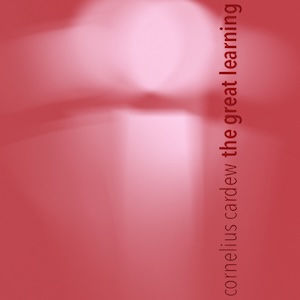
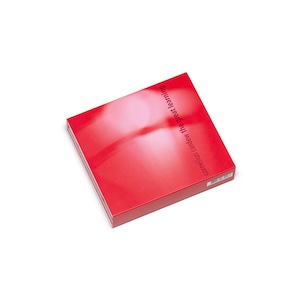
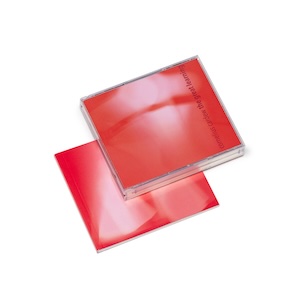
All seven Paragraphs of Cardew's The Great Learning by the Scratch Orchestra Strasbourg under Didier Aschour, an orchestra born from an open call and two years of shared practice: 4CD box with a 116-page booklet.
4CD box with a 116-page booklet. Shiiin's thirteenth release is a complete recording of Cornelius Cardew's The Great Learning, the seven Paragraphs written between 1968 and 1971 on the opening of the Ta Hio (Daxue, "the Great Learning"), the Confucian treatise on self-cultivation and the harmonious ordering of collective life, in Ezra Pound's translation. Mixing voices, instruments, objects and actions through graphic and verbal notation, the score prescribes relationships between the performers more than sounds, and shares out among them the responsibility for the form. The work is inseparable from the Scratch Orchestra, which Cardew founded in London in 1969 with Michael Parsons and Howard Skempton.
The Scratch Orchestra Strasbourg grew out of an open call launched by the Musica festival in spring 2023, with no condition of level or background: amateurs and professionals, the self-taught and people with no previous practice. First gathered in September 2023, the group worked regularly under Didier Aschour, with members of the Dedalus ensemble and Strasbourg musicians versed in improvisation, graphic scores and open protocols passing on tools rather than imposing a reading. The aim was neither to reproduce a traditional orchestra nor to rebuild Cardew's, but to put his principle back into play: turning a diversity of skills into a shared resource.
On 15 September 2024 the orchestra performed all seven Paragraphs in the Saint-Paul church in Strasbourg, a concert of nearly seven hours that opened the music programme of the 42nd Musica festival, in dialogue with Mode d'emploi, the exhibition of instruction-based works at the city's museum of modern and contemporary art. The group went on working on other pieces and came back to The Great Learning for this recording, made in the same church from 27 to 29 November 2025. What it fixes is an interpretation shaped by more than two years of common practice, not a line-up assembled for a single date, which brings it close to Cardew's own idea of the orchestra as a lasting space of practice, learning and collective change.
Alongside Aschour play Lou Renaud-Bailly, Jeanne Barbieri, Stéphane Clor, Yannick Guédon, Jean-Philippe Gross and Thierry Madiot, with Jérémy Marchal on the church organ, the Pelicanto choir directed by Mathilde Mertz and the De-ci De-là choir directed by Cédric Dosch. Paragraphs 1 to 3 fill the first disc and Paragraph 4 the second; Paragraph 5 alone runs over an hour and a quarter on the third, and the fourth holds Paragraphs 6 and 7.
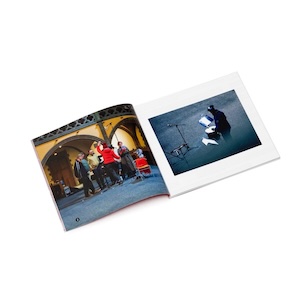
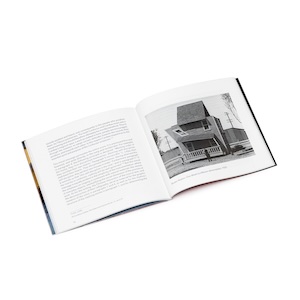
The booklet opens with a text by Stéphane Roth and gathers two essays. Dean Inkster's, written for the 2009 Cardew exhibition at CAC Brétigny, places the work within the composer's aesthetic and political path and shows how the dispersal of the voices opens onto a shared freedom of listening rather than a fusion of the collective. Matthieu Saladin's, first published in Revue & Corrigée in 2020, examines the devices of each Paragraph as so many attempts to contain the relations of domination that form again within any group.
4CD box with a 116-page booklet. Recorded by Christophe Hauser, assisted by Jane David, and mastered by Christophe Hauser. A Shiiin, Dedalus and Festival Musica coproduction.



 Facebookでシェア